
- Impact story
Building an inclusive future with organizations of persons with disabilities
Developing capacities, shaping dreams: how a three-year programme led by WOWLEAP prepared more than 100 community organizations of persons with disabilities in the Philippines to take part in local decision-making.
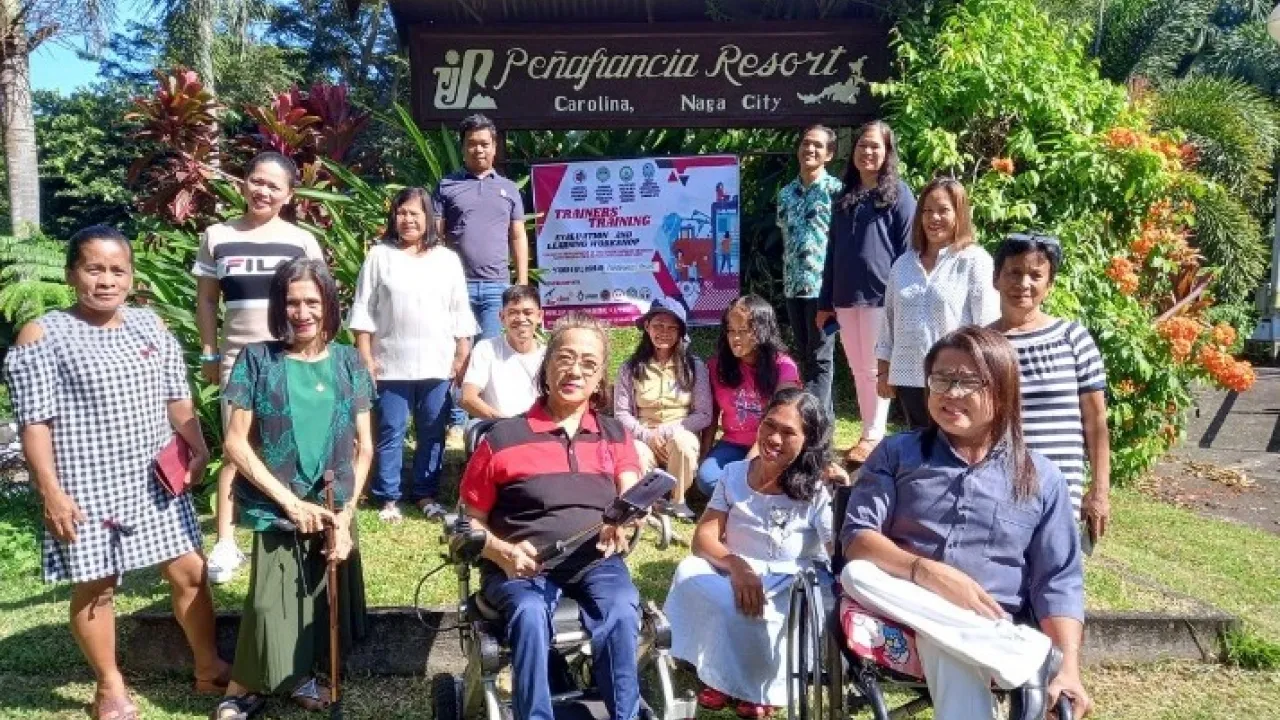
The need to develop the capacities of Organizations of Persons with Disabilities for their effective and meaningful participation in all matters concerning their development has been overlooked for the longest time. The UN Convention on the Rights of Persons with Disabilities demonstrated how the participation of persons with disabilities resulted to a treaty outlining the rights of every individual with disabilities, that every state shall recognize for them to live with dignity on an equal basis with others.
Why the participation of OPDs matters
Organizations of Persons with Disabilities (OPDs) are the structural engine of the global disability rights movement, distinguishing themselves from traditional charities by being led and governed directly by persons with disabilities. They embody the foundational principle of “Nothing About Us Without Us,” ensuring that advocacy is driven by lived experience rather than proxy representation. The following demonstrate the significance of OPD participation in building an inclusive world:
- Authentic representation and policy co-creation: OPDs shift persons with disabilities from passive beneficiaries of state welfare to active architects of public policy. By securing seats on municipal planning boards and national commissions, they ensure that legislation, disaster risk reduction plans, and public budgets are designed by the people who navigate systemic barriers.
- CRPD accountability and shadow reporting: They serve as the primary accountability mechanism for the UN Convention on the Rights of Persons with Disabilities (CRPD). When governments submit sanitized reports on their human rights progress, OPDs counter with evidence-based “shadow reports” that expose structural gaps, unfunded mandates, and on-the-ground realities.
- Dismantling the charity and medical models: OPDs lead the paradigm shift away from viewing disability as a medical defect to be cured or a tragic condition requiring pity. They enforce the human rights and social models of disability, forcing institutions to recognize that people are disabled by inaccessible environments, discriminatory laws, and economic exclusion, not by their impairments.
- Operationalizing intersectionality: The disability community is not a monolith, and grassroots OPDs capture the compounding realities of marginalized sub-groups. By building specific platforms for women with disabilities, rural youth, and parents (OPCDs), they ensure that advocacy addresses intersectional issues like gender-based violence, the unpaid care economy, and inclusive agricultural supply chains.
These are indeed ideal pictures of OPDs as catalysts in development, but sad to say, these are not happening especially in underdeveloped communities where traditional beliefs and negative perceptions about persons with disabilities still exist.
OPDs shift persons with disabilities from passive beneficiaries of state welfare to active architects of public policy.
Three years of capacity development
The Women with Disabilities Leap to Social and Economic Progress (WOWLEAP) led an extensive capacity development program for organizations of persons with disabilities with support from the CBM Global Disability Inclusion Australia through CBM Global Philippines. Four communities were targeted with more than 100 community-based organizations of persons with disabilities. The main goal is to develop capacities of the lead federation and village organization leaders to meaningful and active participation in local decision-making bodies leading to inclusive governance.
The three-year activities focused on the following:
- Targeted grassroots empowerment: The initial phase of the project focused specifically on the capacity development of Organizations of Persons with Disabilities (OPDs) across four municipalities in the Bicol region, Cebu Province, Eastern Samar and Dinagat Island. Each community has distinct characteristics and diverse disability mix.
- Alignment with institutional mission: It serves as a direct implementation of WOWLEAP’s core mission, which is to capacitate all stakeholders—especially OPDs—to co-design, enact and manage disability-inclusive policies, programs, and services.
- Promoting inclusive representation: The capacity-building efforts align with the organization’s broader goal of training cluster leaders to organize within their local communities and successfully secure representation in municipal, city, and provincial federations and local government’s decision-making bodies as a part of the civil society representation.
- Advancing a rights-based society: Founded and led by women with disabilities, WOWLEAP uses these capacity development phases to shift the disability perspective from charity to a rights-based approach. This ensures that persons with disabilities, especially women, are empowered to actively participate in the social, economic, cultural, and political activities of their communities.
What the three years achieved
The results of the three-year work made significant milestones:
- Shift from beneficiaries to self-advocates: Individuals transition from passive recipients of municipal charity to active rights-holders who understand the UN CRPD and local disability laws. They gain the language and confidence to articulate their needs structurally rather than asking for individual favors. The leaders are now trainers going down to the remote zones of their villages to train persons with disabilities to build confidence and self-esteem to face the community and be a part of the organization.
- Intersectional leadership realization: Women with disabilities and young self-advocates move from the margins of community groups into direct decision-making roles. Women and youth with disabilities and parents with disabilities were organized to gain practical governance experience that translates into broader community leadership.
- OPDs legal identity recognition and government accreditation: Sixty percent (60%) of target OPDs were accredited and now qualified as official members of the local decision-making bodies and to receive start-up capital for livelihood projects they will propose.
- Access to technical experts: WOWLEAP facilitated a series of dialogues with government agencies offering skills training, technical assistance and other support to community-based organizations marginalized groups. OPDs from target areas were able to establish engagements with these agencies on their own initiatives.
Gallery 3 photos
The programme in pictures


What comes next
There are still a lot of works to learn for these OPDs to fully realize their vision of full participation in inclusive governance and economic empowerment and organizations’ sustainability. Phase 2 is envisioned to realize this aspiration.
Find organizations of persons with disabilities on the map
The map brings together vetted organizations of persons with disabilities around the world, from national federations to community-based groups.
- Country
- Philippines
- Disability
-
- Pan-disability (entire disability community)
- Activities
-
- Advocacy for people with disabilities